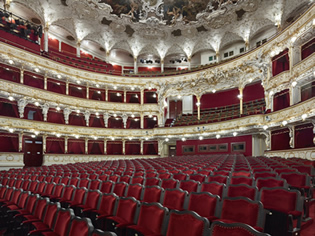
PERFORMANCE DATES La bohème is an annual fixture in the festive repertoire of the theatre. Tickets are available now for: 10,12,17,22,25,31 December 2026. Performances always sell out, so we recommend booking early. ---------------------------------------------------------
La bohème begins on Christmas Eve. It tells the story of Rodolfo, a penniless writer who falls in love with Mimì, a young seamstress. Yet Mimì is gravely ill with consumption, and Rodolfo eventually decides to end their relationship so that she might find a wealthy lover who can provide the care he cannot.
La bohème is based on Henri Murger’s novel “Scènes de la Vie de Bohème” (Scenes of Bohemian Life), a work rich in the essential elements of operatic drama: youth, love, passion and silent tears.
Composed by Giacomo Puccini between 1893 and 1895 to an Italian libretto by Luigi Illica and Giuseppe Giacosa, the opera premiered on 01 February 1896 in Turin and remains one of the most beloved operas in the world.
Act I begins in Paris on Christmas Eve 1830. Marcello and Rodolfo, freezing in their garret, burn pages of Rodolfo’s manuscript for warmth while Marcello paints. Colline and Schaunard arrive with food, fuel and small luxuries bought with money Schaunard has earned helping an elderly gentleman. The four friends decide to celebrate at their favourite Bohemian café. Their landlord, Benoit, appears to collect overdue rent. Once a friend of theirs, he has since married into wealth. The men coax him into drinking, and as he boasts of his affairs, they throw him out and escape paying the rent. Preparing to leave for the café, Rodolfo remains behind to finish writing, promising to join them soon.
A knock at the door introduces Mimì, a neighbour whose candle has gone out. Rodolfo relights it, but she becomes faint and drops her key. Both candles fail, and they search for the key in darkness. Rodolfo finds it but conceals this, eager to prolong their encounter. When their hands meet, he is struck by how cold hers are. They share details about their lives and work, gradually realising they are falling in love.
Rodolfo’s friends call up from the street, urging him to join them. He and Mimì leave together to enjoy the festive celebrations.
Act II
The friends gather at the café and introduce Mimì. Amid the lively scene, Marcello’s former lover, Musetta, arrives dramatically. Despite being accompanied by her wealthy older companion, Alcindoro, she attempts to rekindle her relationship with Marcello. After initially resisting, Marcello gives in when Musetta sends Alcindoro away on an errand. The friends worry about their unpaid bill, but Musetta instructs the waiter to charge everything to Alcindoro.
When the sound of marching soldiers draws the group outside, the crowd carries Musetta out triumphantly. Alcindoro returns to find her gone and discovers he has been left to settle the extravagant bill.
Act III
Two months later, in the freezing February wind, Mimì appears outside an inn, frail and distressed. She finds Marcello and confesses that Rodolfo’s jealousy is driving them apart. Rodolfo left her the previous night, and she believes they must part. When Rodolfo approaches, Mimì hides. Rodolfo claims Mimì is flirtatious, but then admits his real fear: she is gravely ill, and he cannot provide for her. Mimì’s coughing reveals her presence. She says she will bear him no ill will if they separate. Rodolfo and Mimì recall their happier days and sing of their enduring love. Meanwhile, Marcello discovers Musetta flirting with another man, prompting furious quarrelling and their own separation. Mimì and Rodolfo agree to remain together until spring.
Act IV
Back in the garret, Marcello laments Musetta’s new affair while Rodolfo grieves Mimì’s absence. Colline and Schaunard arrive with food and wine to lift their spirits. Their playful reunion is interrupted when Musetta enters, bringing word that a weakened Mimì is outside asking for Rodolfo. He carries her inside and lays her on a cot as the friends gather around. Musetta sends Marcello to fetch a doctor and medicine, offering her earrings as payment, before leaving to find something to warm Mimì’s hands. Colline prepares to sell his beloved coat to buy her food.
Rodolfo speaks tenderly to Mimì, recalling the night they first met when the candles went out. As Musetta and Marcello return, Mimì slips into unconsciousness and dies before the doctor can arrive, leaving Rodolfo devastated. |