| On 27 May 1942, two Czechoslovak paratroopers sent to Prague by their government in exile in London carried out the assassination of Reinhard Heydrich, the Nazi overseer of Czechoslovakia. The mission’s codename was ‘Operation Anthropoid’.
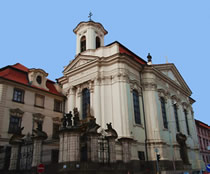
After the attack, the paratroopers, along with several partisans who assisted in the plot, fled to St. Cyril and St. Methodius Cathedral (Pravoslavný chrám svatého Cyrila a Metoděje).
Tragically, another partisan betrayed their location to the Gestapo, who dispatched a unit to the church. Three of the Czechoslovak fighters were positioned in the organ loft and exchanged heavy gunfire with the Germans, but after a two-hour struggle they were overcome.
Attention then turned to the crypt, where the remaining partisans were hiding. Initially, the Germans attempted to shoot their way in, but when this failed, they pumped in a large quantity of water.
Some of the resistance fighters were killed; the remainder took their own lives when they realised escape was impossible. They had spent 21 nights in the crypt.
The dramatic story has been retold in a major film, Anthropoid (2016), television and books, but there is no more poignant way to understand what happened than by visiting the Orthodox church and the small museum in its crypt where the events unfolded, known as the National Memorial to the Heroes of the Heydrich Terror. The exhibition features photos from the period, artefacts and detailed explanations recounting a heroic, heartbreaking, and at times deeply frustrating story.
The museum also tells the wider story of the Czech resistance movement during the Nazi occupation.
The museum and church are free to enter, and there is a book of remembrance that visitors can sign.
The assassination of Heydrich led to horrific reprisals. A state of emergency was declared, and extensive house searches and arrests took place. Hundreds of innocent people were imprisoned and executed, and the entire population of the village of Lidice were murdered or deported to concentration camps.
The Parachutist’s Tavern (Krcma U Parasutistu), a pub opposite the church, has some interesting memorabilia honouring the paratroopers and the struggle of the Czechoslovak people in World War II. | 






 CURRENCY GUIDE





